Databases: The Refineries of the New Petrol (Data) in the AI Era
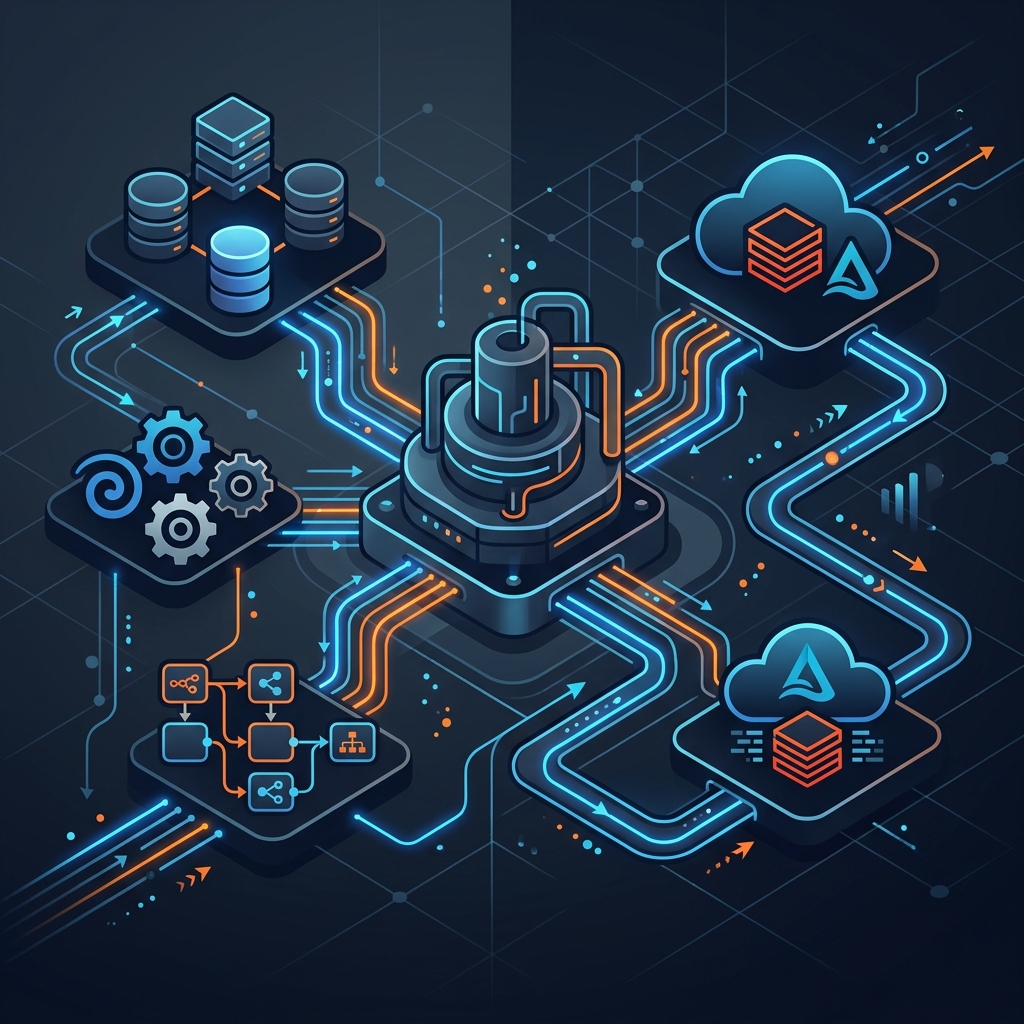
We’ve all heard the modern business maxim: “Data is the new oil.” Coined in 2006 by Clive Humby, the metaphor is highly accurate but frequently misunderstood. Much like crude oil, raw data in its natural, unrefined state is virtually useless. It cannot power a business, inform a decision, or train a machine learning model. To unlock its value, it must be extracted, transported through sophisticated pipelines, and processed in high-performance refineries. In the modern software ecosystem, databases and robust ETL (Extract, Transform, Load) pipelines are those refineries.
Throughout my 20-year career as a Solutions Architect and Tech Manager—most recently leading core engineering teams and orchestrating seamless migrations for 100,000+ customers with zero downtime—I've seen data volumes scale exponentially. Managing this scale requires more than just storing bytes; it requires connecting heterogeneous ecosystems and building pipelines that are automated, resilient, and AI-accelerated. Here, we'll explore how to build these modern refineries using Pentaho, n8n, and Databricks, and how Claude acts as a game-changing catalyst in this architecture.
1. The Heavy Lifter vs. The Agile Conductor: Pentaho & n8n
When designing high-throughput data architectures, you inevitably face different velocities and volumes of data. Trying to solve all data movement problems with a single tool leads to architectural bottlenecks. Instead, we synergize structured batch processing with event-driven agility.
-
Pentaho (Kettle): The Enterprise Batch Engine
For heavy, high-volume batch processing, data warehousing, and legacy migration pipelines, Pentaho Data Integration (PDI) remains a powerhouse. It excels in database-to-database replication, complex schema mappings, and processing massive transactional datasets overnight. In my architectural practice, when integrating deep backend services (such as legacy SQL databases or mainframes) into modern environments, Pentaho provides the structural muscle, secure enterprise connectors, and execution stability needed for raw, high-friction data. -
n8n: The Event-Driven, Low-Code Flow Conductor
On the other hand, modern B2B SaaS, chatbot integrations, and real-time operations need speed, API-centric workflows, and event-driven automation. This is where n8n shines. As a node-based workflow editor, n8n is perfect for stitching together microservices, managing webhooks, processing real-time notifications, and enriching transactional streams. For example, in a collections platform where a customer behavior events need to trigger immediate SMS/chatbot prompts, an n8n flow acts as the lightweight, elastic conductor, connecting databases like MongoDB to external notification APIs instantly.
2. Processing Massive Scale: Enter Databricks
As raw data accumulates, traditional relational databases hit physical and economic limits. When you are processing hundreds of thousands or millions of daily records—such as real-time telemetry or heavy payment logs—you need a modern Lakehouse architecture. This is where Databricks comes into play.
Databricks combines the best of data lakes and data warehouses. Built on Apache Spark, it allows data engineers to write scalable Python, Scala, or SQL code to process petabytes of data across distributed clusters. By leveraging Databricks' Delta Lake technology, we gain ACID transactions on raw files, ensuring data reliability. For AI-first companies, Databricks provides the clean, high-performance data foundation required to feed and train LLM models, making it the ultimate refinery for massive datasets.
3. The Catalyst: How Claude Accelerates Data Engineering
Building, maintaining, and debugging these data systems historically required huge development cycles. However, as an AI Solutions Consultant and a certified Anthropic AI Fluency practitioner, I have witnessed how integrating LLMs—specifically Claude—into the software development lifecycle creates an 80% productivity boost.
Claude isn’t just a code completion tool; it acts as a Senior Data Architect co-pilot that dramatically accelerates data engineering across the entire stack:
-
PySpark Notebook Generation for Databricks:
Writing distributed Spark jobs can be tedious, especially when dealing with deeply nested JSON schemas or complex window functions. Claude can instantly generate clean, optimized PySpark code, suggest correct partition strategies to avoid "shuffling" bottlenecks, and convert raw SQL queries into highly efficient dataframes. -
Custom n8n JavaScript & Python Nodes:
While n8n is low-code, complex data transformations require custom code blocks. Claude generates efficient JavaScript snippet nodes to parse, clean, and map API payloads in n8n, ensuring that memory consumption is minimized and data is properly sanitized before hitting the database. -
Optimizing MongoDB & PostgreSQL Aggregations:
In systems handling 400k+ daily records, a poorly indexed database query can bring down production. Claude helps analyze and optimize complex MongoDB aggregation pipelines and PostgreSQL window queries, designing index strategies that keep response times in milliseconds. -
Legacy-to-Modern Schema Mapping:
During alt.bank’s critical credit card processor migration (transitioning 100,000 customers from FIS to Pismo with zero downtime), we faced vast discrepancies in nested transactional data. Claude was an invaluable ally in analyzing both JSON schemas and automatically writing the custom migration data mapping functions, cutting weeks of manual engineering down to days.
Architectural Takeaway: Build to Adapt
Data is indeed the petrol of our era, but our ability to refine it efficiently determines our competitive advantage. By leveraging Pentaho for enterprise structural batching, n8n for agile API orchestrations, and Databricks for massive distributed processing, we build a highly resilient, hybrid data pipeline.
When you combine these powerful engines with the cognitive capability of Claude, you don't just build pipelines faster—you build them with superior quality, robust test coverage, and automated error-handling. The future of data engineering is hybrid, real-time, and AI-native.